Last Updated: July 17, 2026
Fact Checked By: The Pets Holistics Editorial Team
Independently researched and sourced from AVMA, AAHA, and VCA veterinary resources. See Sources section below.
Reviewed By: Pending assignment — Not yet reviewed by a licensed veterinarian
Key Takeaways
- Most dog diarrhea is mild and diet-related, and resolves within 24 to 48 hours with a short fast (adult dogs only) and a bland diet.
- Boiled chicken and rice, or plain canned pumpkin, are the standard vet-recommended home remedies — never human anti-diarrheal medication without checking with a vet first.
- Water should never be withheld, even when food is.
- Call your vet if diarrhea lasts more than 48 hours, includes blood, is paired with vomiting or lethargy, or occurs in a puppy, senior dog, or dog with an existing condition.
Table of Contents
- What Is Actually Happening in Your Dog’s Gut
- Common Causes of Dog Diarrhea
- What To Do At Home for Mild Diarrhea
- Is Chicken and Rice Good for Dogs with Upset Stomach?
- Is Pumpkin Good for Dogs with Upset Stomach?
- A Myth I Need to Correct Directly
- Myths Versus Facts
- When to Stop Reading and Call Your Vet
- Comparison of Home Care Options
- Diarrhea Across Life Stages
- What Recovery Typically Looks Like
- Frequently Asked Questions
- Conclusion
If your dog suddenly has diarrhea, it’s completely understandable to feel worried—especially if it happens late at night and you’re unsure what to do next. The good news is that many cases are mild, and a safe dog diarrhea home remedy can often provide relief with simple home care. It’s still important to know when diarrhea could signal something more serious. In this guide, you’ll learn safe home remedies, the warning signs you should never ignore, and exactly when it’s time to call your veterinarian. You’ll have a clear, step-by-step plan to help you make the best decision for your dog’s health.
This piece is part of a larger guide on remedy for dog upset stomach. If your dog is also showing a gurgling stomach before or during the diarrhea, that is worth reading about separately, since it often signals the same underlying issue starting earlier. You can also learn more about natural probiotic foods for dogs which plays a role in both treating and preventing loose stool.
By the end of this article you will know the most common causes of diarrhea, a safe step-by-step plan to follow at home, what a bland diet actually looks like, and the specific red flags that mean home care is no longer appropriate.
What Is Actually Happening in Your Dog’s Gut
Diarrhea is not a disease itself. It is a symptom, a sign that your dog’s intestines are moving too fast or absorbing water and nutrients poorly. Normally, the intestines absorb most of the water from digested food, leaving behind formed stool. When something irritates or inflames the gut lining, that absorption process breaks down, and stool passes through loose or watery.
Discomfort levels differ. A dog that has a change in diet that causes mild diarrhea might otherwise act normally – eating, playing, greeting you at the door. A dog with more serious gut inflammation may be uncomfortable, protect its belly, or have a reduced appetite. Watching your dog’s overall behavior, not just the stool itself, tells you a lot about how seriously to take the situation.

Common Causes of Dog Diarrhea
Matching the likely cause to your situation helps you respond appropriately instead of guessing.
Dietary indiscretion. This is the most common cause by far. Getting into the trash, eating something off a walk, or a sudden switch in food can all upset the balance of the gut. This type of diarrhea usually resolves quickly with a bland diet and rest.
Stress or environmental change. Some dogs are sensitive and can have loose stools from boarding, traveling, a new pet in the home, or even a thunderstorm. This is sometimes called stress colitis and is usually short-lived.
Parasites. Intestinal parasites such as giardia, roundworms, or hookworms are a common cause, especially in puppies or dogs with outdoor access. Fecal testing at your vet’s office is the only reliable way to confirm this.
Bacterial or viral infection. Infections can cause more severe diarrhea, sometimes with vomiting, fever, or lethargy alongside it. These often need veterinary treatment rather than home management alone.
Food intolerance or allergy. If you have chronic or recurrent diarrhea, especially if it’s tied to a particular ingredient, it could be a sign of a food sensitivity that needs a long-term dietary solution, rather than a quick fix.
Underlying illness. Less commonly, diarrhea can be a sign of something more serious such as pancreatitis, inflammatory bowel disease, or organ dysfunction, particularly if it is persistent or paired with other symptoms.

What To Do At Home for Mild Diarrhea
If your dog is otherwise acting normal, alert, drinking water, and the diarrhea just started, home care is often reasonable for the first 24 hours. Here is a safe, practical process to follow.
Step-by-Step Home Care Process
- Withhold food for 12 to 24 hours in adult dogs only. This gives the gut a chance to rest. Do not withhold food from puppies, senior dogs, small breed dogs, or dogs with any other health condition, since they can develop low blood sugar quickly. Water should always remain available.
- Offer small amounts of water frequently. Rather than leaving a full bowl for your dog to gulp down, give small amounts every hour or two to prevent dehydration without upsetting the stomach further.
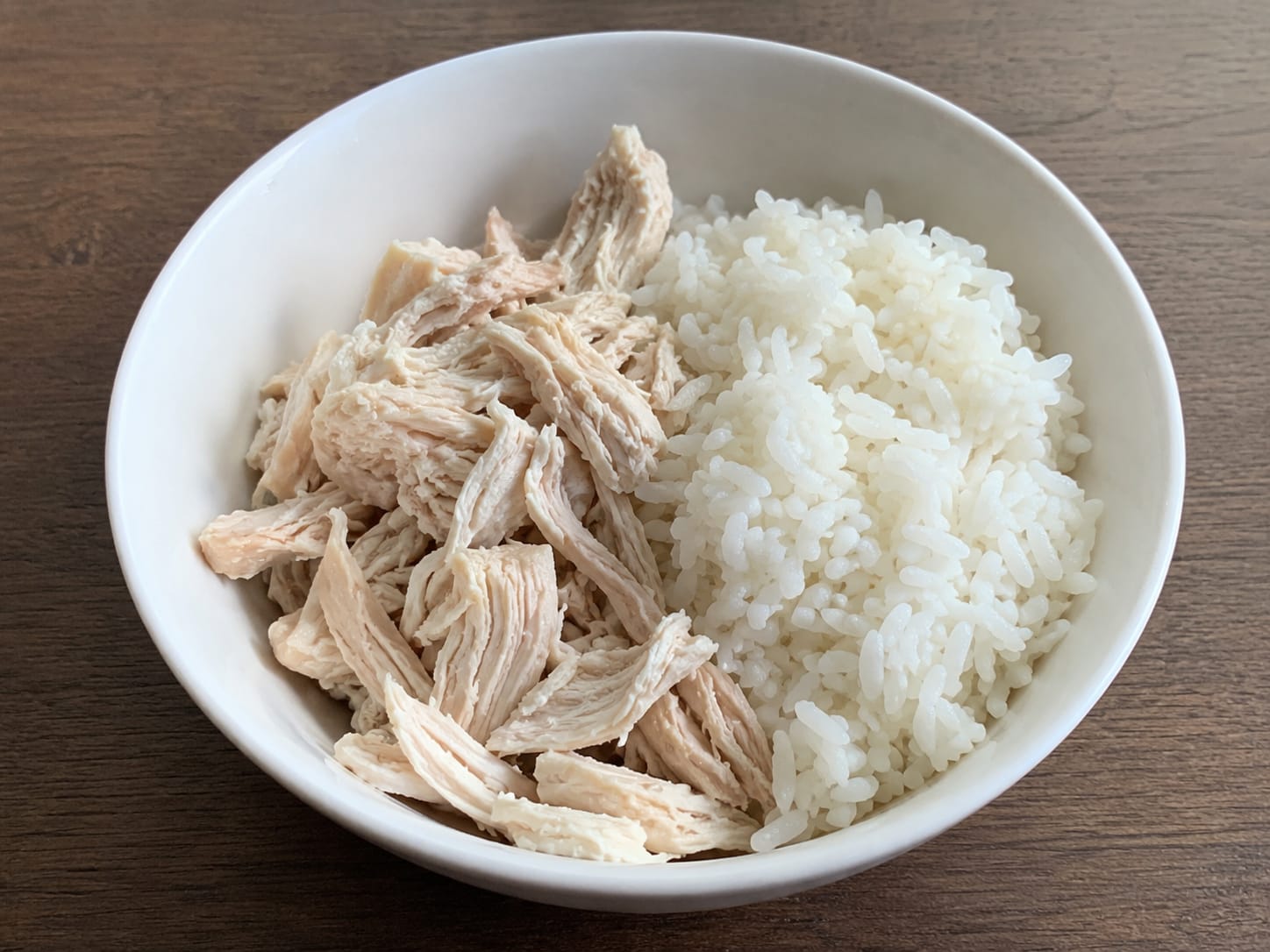
- Introduce a bland diet. Once the fasting period is over, or immediately for dogs who should not fast, offer a bland diet of plain boiled chicken breast, skinless and unseasoned, combined with plain white rice, in a roughly one-to-two ratio of chicken to rice.
- Feed small, frequent meals. Instead of one or two large meals, offer four to six small portions throughout the day for the first day or two of recovery.
- Monitor stool consistency at each bathroom trip. Look for gradual firming over 24 to 48 hours. This is the sign that the gut is recovering as expected.
- Gradually transition back to regular food. Once stool is consistently normal for a full day, mix increasing amounts of your dog’s regular food into the bland diet over 3 to 5 days rather than switching back all at once.
- Reassess constantly against the warning signs below. If at any point during this process your dog shows any red flag symptom, stop home care and contact your vet.
Is Chicken and Rice Good for Dogs with Upset Stomach?
Yes, plain boiled chicken and white rice is a widely recommended short-term bland diet because it is low in fat, easy to digest, and gentle on an inflamed gut. It is not nutritionally complete on its own and is meant to be a temporary measure, not a long-term diet.
Safe substitute options if you do not have chicken and rice available:
- Plain boiled turkey and rice works the same way and is a good substitute if chicken is not on hand.
- Plain canned pumpkin, not pie filling, can be added to either protein-and-rice combination or used alone in small amounts, since its fiber content can help firm stool.
- Plain cooked white potato, no skin, can substitute for rice as the carbohydrate portion for dogs who tolerate it better.
Is Pumpkin Good for Dogs with Upset Stomach?
Yes, plain canned pumpkin is commonly recommended as a source of soluble fiber that can help regulate stool consistency in both diarrhea and constipation. The key word is plain — pumpkin pie filling contains added sugar and spices that can make things worse, not better.
A Myth I Need to Correct Directly
A piece of advice I see repeated constantly online is that you should give your dog human anti-diarrheal medication, such as loperamide, right away at home without checking with a vet first. I want to correct this in a relaxed way because it comes from a wish to help, but it has real risk.
Some human anti-diarrheal medications are genuinely unsafe for certain dog breeds. Loperamide in particular can cause serious neurological side effects in dogs with the MDR1 gene mutation, which is common in herding breeds such as Collies, Australian Shepherds, and their mixes. The risk of incorrect dosing is real even in dogs that do not have this mutation, because human medications are not dosed for canine body weight or metabolism. Even if it looks harmless, always better to call your vet or a pet poison hotline before giving your dog any human medication.
This caution lines up with a broader shift in veterinary thinking: even prescription antibiotics are now considered unnecessary for most acute diarrhea cases, since the majority resolve on their own and antimicrobial use can disrupt the gut microbiome further.
Myths Versus Facts
Myth: A little bit of diarrhea is never serious. Fact: Most cases are mild, but diarrhea combined with lethargy, vomiting, blood, or loss of appetite can indicate something more serious and should not be brushed off.
Myth: Dogs with diarrhea should always be given dairy like milk or yogurt to soothe their stomach. Fact: Most adult dogs are lactose intolerant to some degree, and dairy can actually worsen diarrhea. Plain, unsweetened yogurt in very small amounts is sometimes used for its probiotic content, but milk itself should be avoided.
Myth: If the diarrhea stops for a few hours, the problem is resolved. Fact: Diarrhea can come and go in waves, especially with dietary causes. Watch stool consistency over a full 24 to 48 hour period before assuming recovery.
Myth: Puppies with diarrhea can be treated the same way as adult dogs. Fact: Puppies dehydrate much faster and should not have food withheld for extended periods. Diarrhea in puppies, especially under 4 months old, warrants a lower threshold for calling your vet.
Myth: Diarrhea always means the dog needs antibiotics. Fact: Most mild cases resolve without antibiotics, and unnecessary antibiotic use can actually disrupt the gut microbiome further, sometimes prolonging the problem.
When to Stop Reading and Call Your Vet
Home care is only appropriate for mild, short-term cases. Contact your veterinarian promptly if you notice any of the following:
- Diarrhea lasting longer than 48 hours despite home care
- Blood in the stool, whether bright red or dark and tarry
- Repeated vomiting alongside diarrhea
- Visible lethargy, weakness, or your dog seeming unusually withdrawn
- Loss of appetite lasting more than a day
- Signs of dehydration, such as dry gums, sunken eyes, or skin that does not spring back quickly when gently lifted
- Known ingestion of something toxic, a foreign object, or a large quantity of an unfamiliar food
- Any diarrhea in a puppy, senior dog, or dog with an existing health condition
- Fever, which you may notice as warm ears combined with lethargy, though a thermometer reading is the only accurate way to confirm this
One of the reasons vets recommend not waiting too long to have a persistent case checked out is that ongoing diarrhea can lead to dehydration fairly quickly, especially in puppies, seniors or already-ill dogs.

Comparison of Home Care Options
| Approach | What It Involves | Pros | Cons | Approximate Cost |
|---|---|---|---|---|
| Bland diet at home | Boiled chicken and rice, small frequent meals | Low cost, gentle on the gut, easy to prepare | Only appropriate for mild cases, requires monitoring | Under $10 using ingredients on hand |
| Plain canned pumpkin | Small amounts added to food or given alone | Adds fiber, widely available, inexpensive | Not a treatment on its own, only supportive | $2–4 per can |
| Probiotic supplementation | Vet-approved canine-specific probiotic | Supports gut flora recovery, useful during and after illness | Needs to be dog-specific, human probiotics are not equivalent | $15–30 per bottle |
| Veterinary visit | Physical exam, possible fecal testing or bloodwork | Identifies underlying cause, appropriate for moderate to severe cases | Cost, time, may require follow-up | $50–250 depending on testing needed |
Diarrhea Across Life Stages
| Life Stage | Practical Differences to Know |
|---|---|
| Puppies under 4 months | Dehydrate quickly, should not have food withheld for extended periods, lower threshold for vet visit, higher risk of parasites |
| Adult dogs | Generally tolerate a 12–24 hour fast reasonably well, most resilient group for home care |
| Senior dogs | May have underlying conditions that complicate recovery, should not fast for extended periods, monitor more closely |
| Small breed dogs | Dehydrate faster due to lower body mass, portion bland diet carefully to avoid overfeeding |
| Large breed dogs | Generally more resilient short-term, but any blood in stool or lethargy should be taken just as seriously |

What Recovery Typically Looks Like
For mild, diet-related diarrhea, most dogs show improvement within 24 to 48 hours of starting a bland diet and rest. Stool typically firms gradually rather than all at once, so do not expect an immediate return to normal.
If diarrhea is caused by something more significant, such as an infection or parasite, recovery timelines depend on proper diagnosis and treatment, and can range from several days to a couple of weeks with appropriate veterinary care.
Chronic diarrhea can cause dehydration, nutrient malabsorption, and weight loss if left untreated, especially in smaller or more vulnerable dogs. This is not to alarm you – most cases do indeed work out well – but it is the honest reason that the 48 hour mark is important as a decision point, rather than an arbitrary number.

Frequently Asked Questions
How long does dog diarrhea typically last? Mild, diet-related diarrhea usually resolves within 24 to 48 hours with home care. If it persists beyond that window, it is time to involve your vet, since longer duration often points to a cause that needs proper diagnosis rather than home management alone.
My dog has diarrhea but is acting completely normal, should I still worry? A dog acting normal otherwise is a reassuring sign and often means home care is appropriate for the first day or two. Still, monitor closely for any change in energy, appetite, or the appearance of the stool itself over the next 24 to 48 hours.
What is a bland diet for a dog with diarrhea? A bland diet typically means plain boiled chicken or turkey combined with plain white rice, fed in small frequent portions. It is easy to digest and gentle on an irritated gut, meant as a short-term measure rather than a permanent diet.
Can I give my dog Pepto-Bismol or Imodium for diarrhea? This should only be done under veterinary guidance. Some human medications carry real risks for certain dog breeds and are easy to dose incorrectly, so calling your vet first is the safer path even if it feels like an extra step.
Should I withhold food completely if my dog has diarrhea? For healthy adult dogs, a 12–24 hour fast with continued water access is often reasonable. Puppies, seniors, and dogs with existing health conditions should not fast, since they are at higher risk of complications from skipped meals.
Is it normal for diarrhea to come and go over a couple of days? Some fluctuation is common as the gut recovers, so do not be discouraged by a temporary setback. What matters most is the overall trend over 24 to 48 hours, and whether any warning signs appear alongside the fluctuation.
When should I collect a stool sample for my vet? If your vet suspects parasites or wants to run diagnostic testing, they will typically ask you to bring a fresh stool sample to your appointment. This is a normal, routine part of diagnosing persistent or recurring diarrhea.
Can stress alone cause diarrhea in dogs? Yes, stress-related diarrhea, sometimes called stress colitis, is a recognized phenomenon in dogs, often triggered by travel, boarding, or major changes at home. It typically resolves on its own once the stressor passes and supportive home care is provided.
How This Article Was Made
This article was independently researched using publicly available information from the American Veterinary Medical Association (AVMA), the American Animal Hospital Association (AAHA), and VCA Animal Hospitals. It was last checked for accuracy on July 17, 2026. This article is intended for general educational purposes and does not replace an individual examination and diagnosis from a licensed veterinarian.
Sources
- American Veterinary Medical Association — “Pet with diarrhea? Maybe hold off on the antibiotics.” https://www.avma.org/news/pet-diarrhea-maybe-hold-antibiotics
- American Animal Hospital Association — “10 Pet Health Signs You Should Never Ignore.” https://www.aaha.org/resources/10-pet-health-signs-you-should-never-ignore/
- VCA Animal Hospitals — “Bland Diet Instructions for Dogs and Cats.” https://vcahospitals.com/know-your-pet/blah-blah-and-more-blah-bland-diet-instructions-for-dogs-and-cats
Conclusion
Most dog diarrhea is mild, short-lived, and manageable at home with a simple bland diet and close monitoring over 24 to 48 hours. So the big things to keep in mind are to watch your dog’s overall behavior, not just the stool itself, to stick with plain chicken and rice or another of your dog’s safe substitutes instead of grabbing for human medicine, and to use the 48-hour mark as your true decision point for calling the vet. For the broader picture on upset stomach care, including when gurgling or other early symptoms show up before diarrhea starts, visit the full guide on remedy for dog upset stomach.